Apartment Balcony Composting: Year-Round Guide
Dream of turning kitchen scraps into black gold without a backyard? Many apartment dwellers think composting is off-limits, but with the right setup, your balcony can become a year-round composting hub. Learn how to choose the perfect bin, prevent odors, and keep your compost active in summer heat or winter chill—all in a compact space.
Why Compost on a Balcony? Debunking Myths
If you’ve ever hesitated to start composting because you live in an apartment with only a balcony, you’re not alone. The idea of banana peels and coffee grounds piling up just steps from your sliding door can trigger a lot of “what ifs.” But here’s the good news: balcony composting is not only completely doable, it’s one of the most rewarding choices you can make for your plants and the planet. Let’s clear up the common worries and look at what you actually gain.
First, the scale. About 30% of what the average household throws away is organic material that could be composted instead of buried in a landfill. When those scraps decompose without oxygen in a landfill, they generate methane—a greenhouse gas far more potent than carbon dioxide. On your balcony, you can turn those same scraps into something life-giving. That’s a meaningful difference, and it starts with a container no larger than a storage tote.
Now, the big fear: odor. “Won’t my balcony reek?” The truth is, a well-managed compost bin smells earthy, not foul. Bad smells happen when there’s too much moisture and not enough air, or when you overload on nitrogen-rich “greens” like veggie peels. You can easily prevent this by layering with plenty of “browns”—dried leaves, shredded cardboard, or untreated paper—and giving the pile a quick stir every few days. Small-space compost systems like worm bins or bokashi buckets are designed to be odor-free indoors, so on a breezy balcony, they’re practically invisible to the nose.
Another anxiety: “I’ll be inviting every bug and rodent in the neighborhood.” Not if you use the right setup. Choose a bin with a secure lid, and if you’re really concerned, opt for an enclosed tumbler or a bokashi system that seals tightly. Avoid adding meat, dairy, or oily foods, which are the main culprits for attracting pests. Place your bin on a stand or a tray to elevate it, and keep the area around it clean. A healthy, active compost pile is actually less tempting to pests than an open garbage can.
Beyond these myth-busting reassurances, think about the tangible reward. In a matter of weeks or months, that apple core and wilting arugula become dark, crumbly compost—completely free soil conditioner that’s packed with nutrients. Your potted herbs, flowers, and even that struggling fiddle leaf fig will drink it up. There’s no need to haul heavy bags of potting mix up the stairs or spend extra money at the garden center. You’re closing the loop right where you live.
Balcony composting fits an urban pace perfectly. It takes five minutes out of your day, uses a tiny footprint, and turns your organic waste into a resource instead of a burden. It’s a fast sustainability win that not only reduces your personal carbon trail but also nurtures a thriving green space in the middle of the concrete jungle. So go ahead—grab that countertop collection container and claim your role in the soil cycle. Your balcony will never look, or smell, better.
How to Pick the Perfect Balcony Compost Bin
Finding the right bin transforms composting from a maybe-one-day idea into a simple daily habit. For your tiny outdoor space, three small-space stars really shine: the tumbler, the worm bin, and the bokashi bucket. Each one works a little differently, so you can choose based on your lifestyle and balcony setup.
Tumbler bins look like a drum on a stand and spin with a quick turn of a handle. They work fast, trap odors tightly, and save your back since you never need a pitchfork. The trade-off? They can be heavy once full, and the upfront cost is higher than simpler methods. Still, if you want a clean, no-mess system that makes turning a breeze, a tumbler is a brilliant choice.
Worm bins house red wiggler worms that eat your food scraps and leave behind rich, dark castings—garden gold! They have a tiny footprint, fit perfectly under a bench or even inside a cool corner of your apartment, and the worms do all the aerating for you. The catch is that worms need protection from freezing winters and scorching summers, so you have to keep an eye on temperature extremes. But for an apartment that stays mild year-round, worm composting is quiet, odor-free, and deeply satisfying.
Bokashi buckets use fermentation to break down every single food scrap you throw at them—think citrus peels, leftover mac and cheese, even meat and dairy that traditional composting avoids. The bucket itself is compact and sealed, so absolutely no smells escape. After about two weeks, you bury the fermented scraps in a larger planter or a friend’s garden to finish decomposing. The beauty here is you can compost everything right in your kitchen corner, but you do need that second step for soil completion.
Once you’ve picked your style, pay attention to a few must-have features. Aim for a 5- to 15-gallon capacity—big enough to reduce trips but light enough to move around. A truly airtight seal keeps odors locked in and pests out, especially important in multi-unit buildings. UV-resistant material won’t crack or fade under harsh sun, and it helps maintain the right internal temperature. Finally, never skip the weight check: filled bins can get surprisingly heavy, and your balcony’s structural limit is non-negotiable. Match the bin’s weight to your floor load rating and you’ll compost with confidence all year long.
Balcony Compost Setup: Step-by-Step
Ready to turn kitchen scraps into garden gold right on your balcony? With a little planning and the right location, you can set up a thriving compost system that fits your urban space. Let’s walk through it step by step.
First, find the perfect spot. Choose a shaded corner that’s protected from harsh direct sun and strong winds—this helps regulate temperature and moisture. Ideally, it should be just steps away from your kitchen so daily scrap drop-offs become effortless.
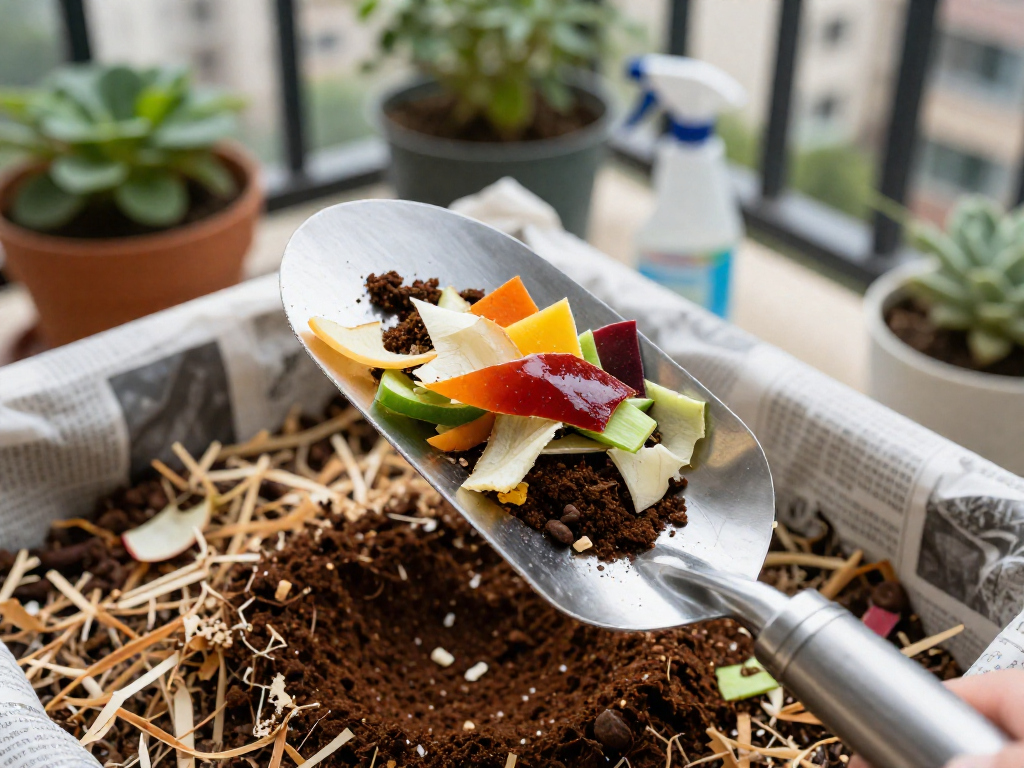
Once you’ve chosen your location, place your bin and begin with a bedding layer about 4-6 inches deep. Shredded newspaper, dry leaves, or plain cardboard work beautifully as your carbon base. This layer encourages airflow and absorbs excess moisture. On top of the bedding, sprinkle a handful of finished compost or healthy garden soil to introduce the beneficial microbes that will kick-start decomposition.
Now you’re ready for the fun part: feeding your compost. Each day, add your kitchen scraps—think fruit and vegetable peels, coffee grounds (with the filter!), crushed eggshells, and small amounts of bread or grains. These materials are your “greens,” providing nitrogen. After every deposit, always cover the scraps with a generous layer of “browns”: dried leaves, shredded paper, sawdust, or even torn-up brown cardboard. This not only balances the carbon-to-nitrogen ratio but also prevents odors and deters pests.
Aim for roughly 2-3 parts browns to every 1 part greens by volume. If things look too wet or start to smell, add more browns. If the pile seems dry and slow, add a sprinkle of water or extra greens. With this simple routine, your balcony compost will stay happy and active year-round.
Seasonal Composting Hacks for Balconies
Keeping your balcony compost active through the year is all about making small, seasonal adjustments. Here’s how to help your bin thrive no matter the weather.
Spring
Spring is the perfect time to refresh your compost after winter. Add fresh bedding like shredded newspaper or coconut coir, and check moisture levels—after cold months, the bin may be too dry. As your plants start growing, increase the amount of green kitchen scraps you add. Chop them small to speed up breakdown.
Summer
Balconies can get brutally hot, and a baking compost bin can kill beneficial microbes. Move the bin to the shadiest part of your balcony, or create shade with a light-colored cloth. Fruit flies are more active in summer; cover new kitchen scraps with a layer of browns (dry leaves, cardboard) immediately. Check moisture daily—the mix should feel like a wrung-out sponge—and stir gently to release heat.
Fall
As leaves drop, grab a bagful of dried leaves; they’re free, carbon-rich browns that you’ll need all winter. Shred them by hand or with a mower if possible. At night, when temperatures begin to dip, insulate the bin by wrapping it in bubble wrap or an old blanket. This keeps the core active a few weeks longer.
Winter
Freezing temps slow decomposition dramatically. For outdoor tumblers, turning too often lets heat escape, so reduce frequency. If your bin freezes solid, don’t fight it—add scraps when you can, and resume turning in spring. A worm bin kept indoors or an insulated bokashi system becomes invaluable during winter. Bokashi pre-ferments waste so it can be buried later, and it thrives even when it’s cold. If you stick with an outdoor pile, accept slower breakdown and focus on stockpiling browns and layering.
Year-Round Tip
Keep a mini kitchen caddy with a tight lid on your counter. Empty it every couple of days. This prevents indoor odors and makes composting a seamless habit, no matter the season. Half the battle is simply getting those scraps to the bin before you forget!
Odor Control and Pest Prevention
Nobody wants a stinky balcony or a cloud of flies around their compost bin. The good news is that with a few simple habits, you can keep both smells and pests completely under control, even in a small outdoor space.
Start with what goes in. The number one rule for odor-free composting is to never add meat, dairy, oily foods, or processed leftovers. These items break down slowly, attract pests, and create foul smells. The only exception is if you’re using a bokashi system, which ferments food waste in an airtight container and can safely handle these materials.
Moisture is the next key. A healthy compost pile should feel like a wrung-out sponge—damp but not dripping. If your bin starts to smell sour or like ammonia, it’s often too wet. Fix this by mixing in dry “browns” such as shredded paper, cardboard, dried leaves, or coconut coir. These absorb excess moisture and bring back a fresh, earthy scent.
A tight-sealing lid is your first line of defense against bugs. Make sure your bin closes securely. If you notice tiny flies, adding a charcoal filter to the lid can help trap odors and block fruit flies. Many apartment compost bins come with built-in filters, but you can also DIY one with a piece of activated charcoal cloth.
Place your bin on a shallow tray or saucer to catch any liquid (leachate) that may seep out. Empty this tray regularly—every few days in warm weather—to prevent stagnant water and smells. The nutrient-rich leachate can actually be diluted and used to water your plants, so it’s not a waste.
For extra protection against crawling insects, sprinkle a thin ring of food-grade diatomaceous earth around the base of the bin. It’s a natural powder that dehydrates ants, roaches, and other pests without harmful chemicals. You can also wipe the outside of the bin with a few drops of peppermint or citrus essential oil—these scents naturally repel many bugs and leave your balcony smelling fresh.
If you’re using a worm bin (vermicomposting), the rules are slightly different. Always bury fresh food scraps under a few inches of bedding, like shredded newspaper or coconut coir. This prevents fungus gnats and fruit flies from finding the food. Avoid overfeeding—start with small amounts and only add more once the worms have processed the previous batch. A balanced worm bin is practically odorless and pest-free.
With these simple practices, your balcony compost will stay clean, fresh, and discreet, letting you focus on growing healthy plants rather than worrying about neighbors.
Harvesting and Using Your Balcony Compost
When your compost turns dark and crumbly, smells earthy, and shows no traces of food scraps, it’s ready to use. For a tumbler, stop adding fresh material and give it a final spin every few days for two to three weeks. The finished compost will settle at the bottom. With a worm bin, push food to one side and wait – the worms will migrate, leaving harvestable castings on the other side.
Sprinkle compost as a top dressing on potted plants, gently working it into the top inch of soil. When potting new plants, blend up to 30% compost with your potting mix. For a quick nutrient boost, brew compost tea by steeping a handful in water for a day, then use it to water your plants.
If you have more than you need, share with neighbors or houseplants. Store excess in a breathable bag or covered container in a cool, shaded spot on your balcony until you’re ready to use it.
FAQ
Can you compost on an apartment balcony without it smelling?
Yes, a well-managed balcony compost shouldn’t smell. Balance “greens” (food scraps) with “browns” (dry leaves, shredded paper) and aerate regularly. Using a bin with a tight lid and charcoal filter helps contain any odors.
What food scraps should I avoid composting on my balcony?
Avoid meat, dairy, oils, and cooked food scraps, as they can attract pests and create odors. Also skip pet waste, diseased plants, and anything treated with pesticides. Stick to fruit/vegetable scraps, coffee grounds, and eggshells.
How long does it take to make compost on a balcony?
With active turning and ideal conditions, you can have finished compost in 2-4 months. Cold or passive methods may take 6-12 months. Balcony conditions like limited sun or cooler temps can slow the process.
Will composting attract pests like rats or roaches to my balcony?
Properly maintained balcony compost is unlikely to attract pests. Avoid adding meat, grease, or uncovered food scraps. Keep the bin sealed and consider lining vents with fine mesh to exclude insects and rodents.
Which compost bin is best for a very small balcony?
A compact tumbler bin is great for small spaces because it’s enclosed, easy to turn, and speeds up decomposition. Electric countertop composters are another odor-free option but require power. For tight budgets, a simple 5-gallon bucket system works well.
Can I compost in winter on an unheated balcony?
Yes, composting continues in cold weather, just at a slower pace. Insulate your bin with blankets or foam to retain some warmth. You can also switch to bokashi composting, which ferments scraps indoors and then you bury them in the bin when temperatures rise.